What to Look for Before You Book a Buggy Ride in Dubai
Know the Terrain and What It Demands
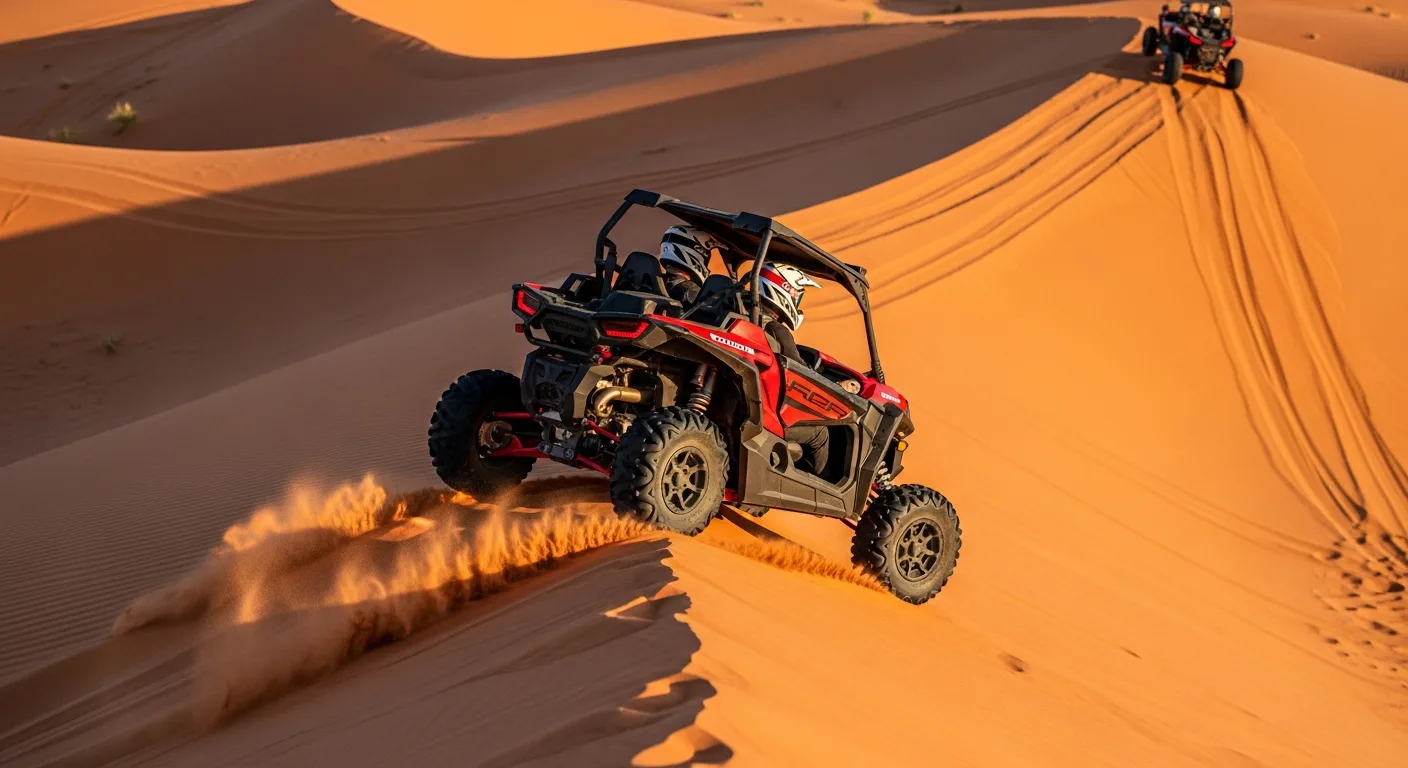
The desert around Dubai is not a flat sandbox. It is a living landscape of towering dunes, soft bowls, and sudden drop-offs. The same patch of sand can feel firm one morning and loose by midday. Understanding this terrain is the first thing to consider before you book a buggy ride. A machine that handles well on gravel roads or muddy trails may struggle here. The desert rewards vehicles built for deep sand, with wide tires and enough ground clearance to avoid getting stuck. If you are looking at a buggy that seems more suited to a dirt track or a rocky path, think twice. The right off-road vehicle for Dubai’s desert is one designed to float on top of the sand rather than dig into it.
Beyond the vehicle itself, think about the route. Some trips stick to relatively flat areas where beginners can get a feel for the controls. Others push into the big dunes, where momentum and steering angles matter. Ask what kind of ground you will cover. A good operator will describe the terrain honestly. If they promise extreme dune bashing but cannot tell you how they manage safety on steep slopes, that is a sign to keep looking.
Check the Condition of the Buggy
A buggy that looks polished in the parking lot may hide problems that show up once you hit the sand. Look at the tires first. Sand tires have deep, widely spaced treads that let the rubber bite into loose ground. If the treads are worn flat or the tires look like they belong on a road car, the buggy will struggle to climb and turn. Check the tire pressure too, desert driving often needs lower pressure to increase the contact patch. A reputable provider will have this dialed in, but it is worth asking.
Next, examine the safety harness. A four-point or five-point harness keeps you secured in the seat when the buggy pitches over a dune crest. The straps should move freely through the buckles and show no fraying. If the harness feels stiff or the latch does not click cleanly, ask for a different buggy. The same goes for the roll cage. Walk around the vehicle and look for dents, cracks, or signs of a previous roll. A bent frame may have hidden weaknesses. The engine power matters too. A buggy with a small engine may lack the torque to climb soft dunes, leaving you stuck or forcing you to take dangerous runs at the slope. On the other hand, a very powerful engine in the hands of an inexperienced driver can cause the buggy to dig in or spin out. Know your comfort level and choose a buggy whose power matches your skill.

One way to see what a well-maintained fleet looks like is to browse the Dune Buggy Rentals Dubai official site. It often shows the models available and gives a sense of the standards they follow. That alone does not replace an in-person check, but it helps you set expectations before you arrive.
Understand the Rental Duration and What It Includes
Rental duration is more than just how long you are in the buggy. Some packages count the driving time only, while others include briefing, gear fitting, and breaks. A two-hour slot might mean only 90 minutes of actual driving. Ask for a clear breakdown. Also find out what happens if you want to extend on the spot. Some operators allow it; others have fixed schedules and cannot add time.
Fuel is another detail worth checking. Most desert buggy rentals include fuel for the booked duration, but not all do. The last thing you want is to be halfway up a dune and wonder if the tank is running low. Ask whether the buggy is delivered with a full tank and whether refueling is available if the trip runs long. Also check what happens if you damage the buggy. A clear policy on damage liability protects both sides. If the operator is vague about costs or mentions hidden fees, that is a red flag.
Ask About the Guided Tour and Safety Briefing
A guided tour can make the difference between a mediocre ride and a memorable one. An experienced guide knows which dunes are safe to climb, which ones have soft spots, and how to read the wind patterns that reshape the sand overnight. Ask whether the guide leads from the front or follows behind. A lead guide sets the pace and shows the line; a trailing guide makes sure nobody gets left behind. Both approaches work, but you should know which one you are getting.
The safety briefing should cover more than just how to start the engine. It should explain how to position your body on a steep climb, what to do if the buggy starts to tip, and how to communicate with the guide using hand signals. If the briefing feels rushed or the guide seems distracted, that is a bad sign. The desert can change quickly, and a solid briefing is your first layer of protection.
Some operators also provide a practice area where you can get a feel for the buggy before tackling the big dunes. That is a good sign. It shows they care about your comfort and safety, not just getting you out on the sand as fast as possible.
Look at the Company’s Reputation and Policies
Before you hand over any money, spend a few minutes reading recent reviews. Look for comments about vehicle condition, guide quality, and how the company handles problems. A few negative reviews are normal, but a pattern of complaints about broken buggies or rude staff is a warning. Pay attention to how the company responds to criticism. A professional reply that addresses the issue is better than a defensive one or no reply at all.
Also check the cancellation and refund policy. Plans change, especially when desert weather is involved. A company that offers a clear, fair policy is more likely to be trustworthy than one that locks you into a no-refund booking. The Dune Buggy Rentals Dubai official site is a good place to start for understanding the general approach of a company that takes its reputation seriously, but always verify details directly before booking.
Insurance is another point to clarify. Some operators include basic coverage in the price; others expect you to pay extra or to sign a waiver that puts most of the risk on you. Read the waiver carefully. If you are not comfortable with the terms, ask whether you can buy additional coverage. A company that is transparent about insurance is usually one that has nothing to hide.
Consider Your Own Experience Level
Not everyone who books a buggy ride has driven off-road before. That is fine, but honesty about your skill level helps the operator match you with the right vehicle and route. A first-timer should not be put in a high-powered buggy on black-diamond dunes. A good operator will ask about your experience and adjust accordingly. If they do not ask, or if they try to upsell you to a more extreme package without checking your comfort, that is a warning.
If you are an experienced driver, you may want a buggy with more engine power and a route that challenges your skills. Even then, check that the vehicle has been maintained for that kind of use. High-performance buggies need more frequent checks on brakes, suspension, and cooling systems. A company that rents them should be able to show that they service them properly.
Watch for Hidden Fees and Extra Charges
The price you see advertised may not be the price you pay. Some companies add fees for delivery, for cleaning if the buggy gets muddy, or for using a credit card. Others charge extra for a second passenger or for insurance. Ask for a full price breakdown before you book. A straightforward company will give you a clear total. One that hesitates or gives vague answers is probably hiding something.
Also ask about the deposit. Most rentals require a security deposit, which is refunded when you return the buggy undamaged. Find out how much it is, whether it is a hold on your card or a charge, and how long it takes to be released. A company that is slow to refund deposits may not be the best choice.
Trust Your Instincts
After you have checked the vehicle, the route, the guide, and the policies, take a moment to assess the overall feeling you get from the company. Are they responsive to your questions? Do they seem knowledgeable about the desert and the equipment? Do they encourage you to take your time and be safe? If something feels off, it probably is. There are enough operators in Dubai that you can afford to be selective. A good ride starts with a good booking decision, and that decision comes from asking the right questions before you commit.